
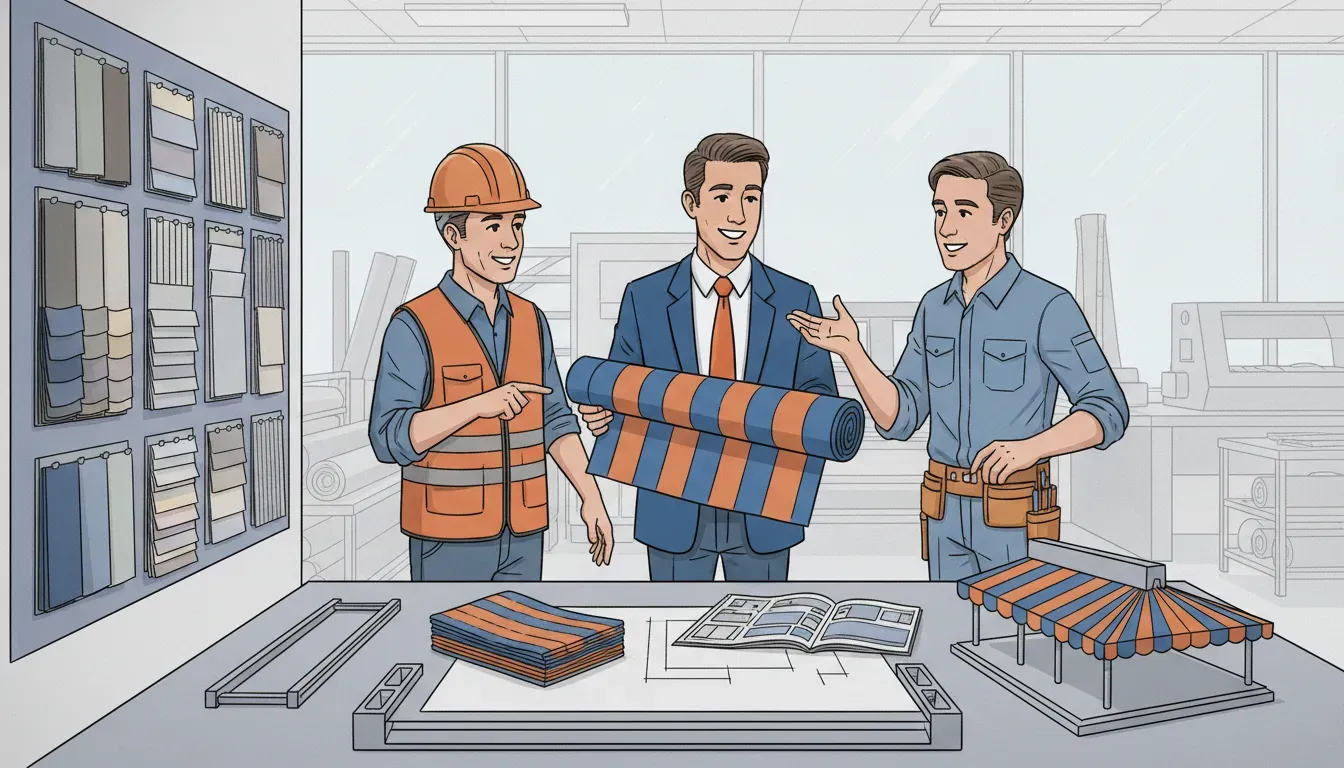
Choosing a salesforce crm for awnings shading manufacturers is not a matter of putting a standard sales pipeline on top of a factory. A buyer needs one operating view for configurable products, dealer and direct channels, production commitments, installation dates, warranty history, and the business decisions that protect margin.
Let's Talk Strategy about your awnings and shading operation
Salesforce can give an awnings or shading manufacturer a connected view from inquiry and configuration through quote approval, production, installation, and service. The value depends on a business-specific data model, clear integration boundaries, and phased delivery. Buyers should evaluate those decisions before comparing features or signing an implementation agreement.
The right question is not whether Salesforce has enough objects or automation. It is whether the proposed design reflects how your company actually sells, builds, installs, and supports custom products.
Why Is Salesforce CRM for Awnings and Shading Manufacturers Different?
Custom awnings and shading products combine consultative selling, variable dimensions, material choices, motorization, site conditions, production constraints, and field work. A useful CRM must connect those decisions without forcing sales, operations, and service teams to maintain separate versions of the customer record.
A manufacturer may sell through dealers, commercial contractors, architects, distributors, and direct residential inquiries. Each channel creates different qualification steps, price considerations, contacts, and service expectations. A generic opportunity record rarely captures enough detail to make the handoff from sales to operations reliable.
Buyers should look for a design that connects these business events:
Demand: the lead source, property type, project timing, channel partner, and decision makers. Configuration: dimensions, fabric, frame, controls, mounting conditions, accessories, and approved substitutions. Commercial terms: pricing logic, discounts, deposits, quote revisions, approvals, and expected margin. Fulfillment: production status, purchased components, promised dates, delivery requirements, and installation readiness. Ownership after the sale:* asset history, warranty coverage, service cases, parts, and future replacement opportunities.
This is the boundary between a CRM that records conversations and a platform that helps leadership manage the order lifecycle. The platform should support the business process, not make employees recreate factory and field details in spreadsheets.
What should buyers map before signing?
Ask the prospective partner to walk through one real order from first inquiry to final service visit. Use a complicated example, not the easiest sale. Include a dealer order, a commercial site with multiple awnings, or a residential project that changes after measurement. The walkthrough should show who owns each decision and where the next team receives a complete handoff.
A credible proposal should identify the records, approvals, integrations, and exceptions required for that journey. It should also explain which capabilities are standard Salesforce configuration, which require custom development, and which remain in an ERP, accounting platform, quoting tool, or field-service system.
How Should Quote-to-Order Work for Custom Awning Products?
A strong quote-to-order design preserves the customer's requirements, product configuration, commercial approvals, and production commitments as one traceable chain. It should make revisions visible, prevent an outdated quote from becoming an outdated work order, and give operations enough detail to act without rekeying the sale.
Custom order complexity is where many CRM projects lose credibility. A buyer may hear that Salesforce can support quoting, but the important question is how the proposed solution handles revisions and exceptions. A quote for a retractable commercial awning may change after a site visit, engineering review, fabric availability check, or customer approval.
Evaluate the proposed process against these stages:
- Capture requirements: record the application, site conditions, measurements, product family, materials, controls, and customer constraints.
- Build and revise the quote: show configuration choices, pricing assumptions, discount authority, approval status, and the history of changes.
- Approve and hand off: create a clear order or project record with the data production and purchasing teams need.
- Plan fulfillment: connect promised dates to manufacturing capacity, component availability, delivery needs, and installation dependencies.
- Close the loop: carry the final configuration, installed assets, documents, and customer commitments into service.
| Buyer checkpoint | What the design should make visible | Risk to test in the demo |
|---|---|---|
| Configuration | Product choices and required measurements | Can a revision preserve the original and show what changed? |
| Approval | Quote version, discount authority, and customer decision | Can an outdated quote be identified before production? |
| Handoff | Order requirements and promised dates | Does operations receive usable data without rekeying? |
| Exception | Shortages, substitutions, change orders, and delays | Who sees the issue, and how is the customer updated? |
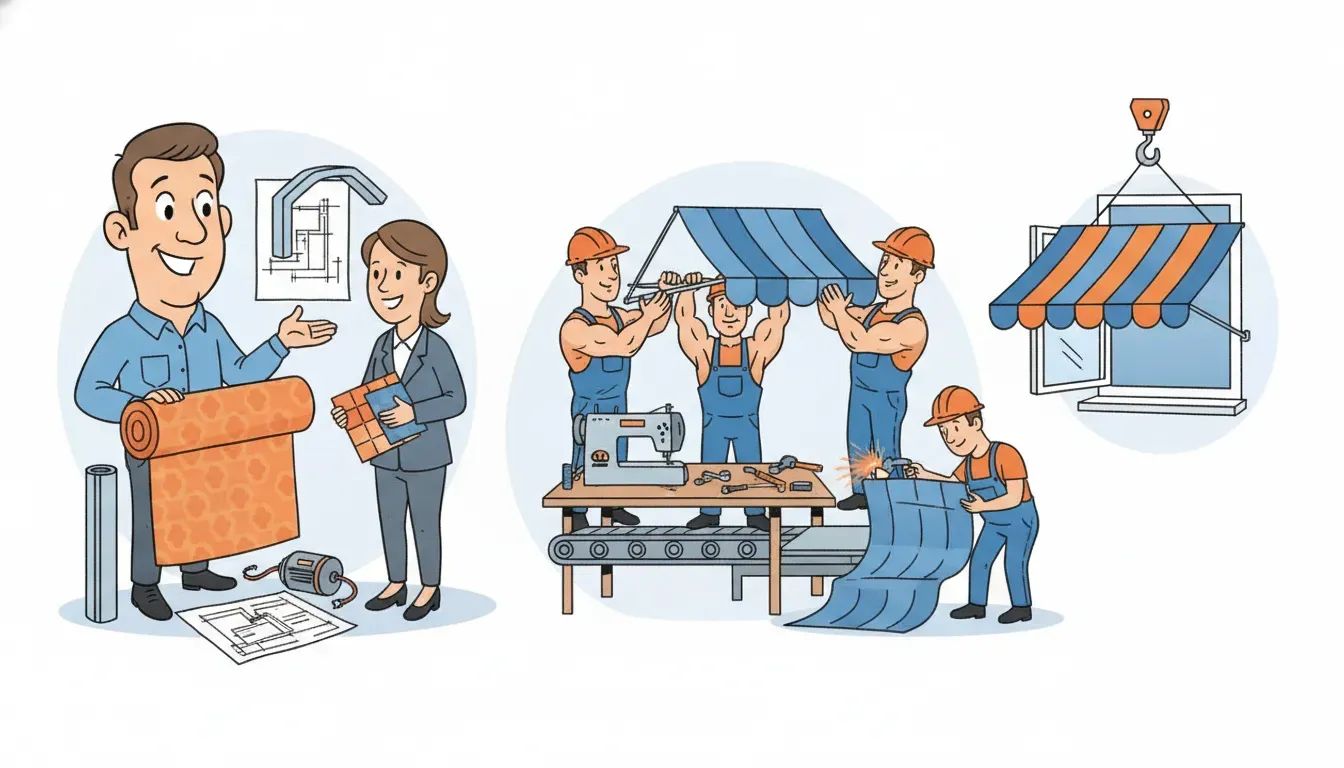
Salesforce may sit alongside an ERP, accounting platform, product configurator, or dedicated quoting system. That is not automatically a weakness. The buyer should require a clear system-of-record decision for customer data, product details, pricing, inventory, orders, and invoices. A proposal that promises to replace every system without mapping ownership is a risk, not a transformation plan.
Omnivo's guide to Salesforce for retail, consumer goods, and custom manufacturing provides the broader context. This article narrows that lens to the order and service realities of awnings and shading manufacturers.
Discuss your quote-to-order workflow with a Salesforce strategist
What Should Salesforce Service and Warranty Management Include?
Service value starts when the installation is complete. Salesforce should give service teams the customer, location, product configuration, installed asset, warranty terms, prior cases, and promised response information they need to resolve an issue without searching through email or asking sales to reconstruct the order.
For awnings and shading companies, service is tied to physical assets and site conditions. A warranty question may involve a motor, fabric, frame, sensor, mounting point, or installation detail. A CRM design that stores only a generic case description makes repeat diagnosis harder and weakens the relationship with the account.
During a demonstration, ask to see how the proposed system handles:
Installation completion and the creation of an installed product or asset record. Warranty start dates, coverage rules, excluded conditions, and approval paths. Service requests linked to the correct customer, location, project, and installed configuration. Dispatch, technician availability, appointment windows, parts, and completion notes. Escalations for repeat failures, delayed parts, safety concerns, or dissatisfied customers. Service history that sales and account teams can use for renewals, replacements, and expansion.
Field Service can be part of this design, but the product name is not the architecture. Ask how work is created, scheduled, updated in the field, and closed. Ask what the technician can see when connectivity is limited. Ask how a service outcome changes the account record and how leadership measures response time, repeat visits, backlog, and warranty exposure.
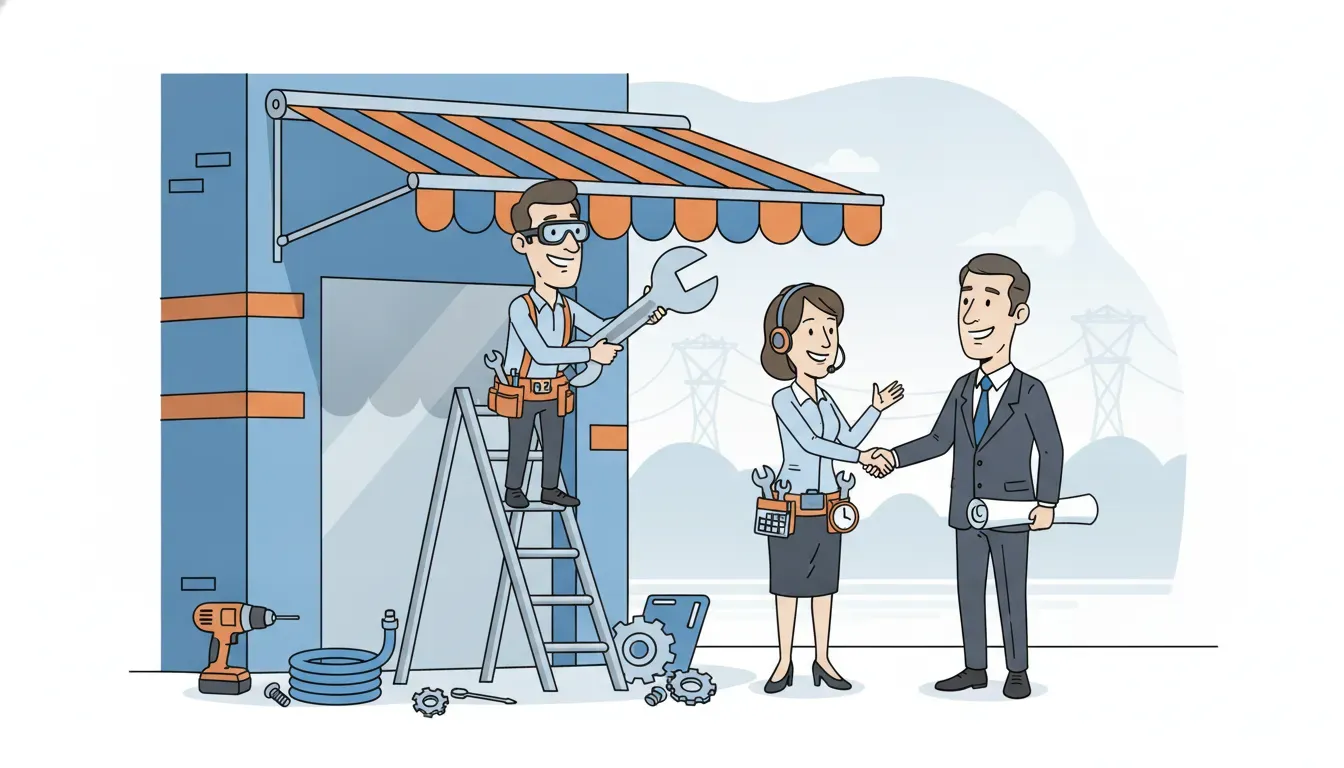
Omnivo's Salesforce CRM manufacturing guide covers the larger connection between sales, production, and service. For an awnings manufacturer, the evaluation should go one step further by testing the installed asset and warranty journey in the same demonstration.
How Can One Org Serve Residential and Commercial Accounts?
One Salesforce org can support residential and commercial business when the data model separates account relationships, buying motions, locations, projects, and service obligations without duplicating customers. The design should provide shared visibility where useful and distinct workflows where the two segments genuinely operate differently.
Residential and commercial sales are not simply two picklist values. A residential opportunity may center on one homeowner, one property, and a short installation window. A commercial opportunity may involve a general contractor, architect, property owner, dealer, facilities team, multiple locations, procurement requirements, and a phased rollout.
| Area | Residential motion | Commercial motion |
|---|---|---|
| Relationship | Homeowner or household | Business, dealer, contractor, owner, and site contacts |
| Scope | One property and installation | Multiple sites, phases, and stakeholders |
| Sales process | Consultation, measurement, quote, approval | Specification, bid, negotiation, purchase order, rollout |
| Service | Property-level asset and warranty history | Site-level assets, service agreements, and account escalation |
The buyer should ask whether the partner has designed account, contact, location, project, and asset relationships for both segments before. They should also ask how channel partners are represented. Dealers and installers may influence a sale, submit service requests, own the customer relationship, or perform part of the work. Those distinctions affect access, attribution, and reporting.
This is where an industry-aware partner can add value beyond a feature checklist. Omnivo's Retail and Consumer Goods perspective addresses the channel and customer-experience pressures that shape complex product businesses, while its broader Salesforce work across other industries illustrates a business-first approach to different operating models.
What Would a Five-Tool Replacement Look Like?
A mid-size awnings manufacturer may have separate tools for lead tracking, quoting, production status, scheduling, and service. Treat that as a hypothesis to test, not as proof that Salesforce should replace all five. The objective is a reliable operating model, not a large migration that moves every existing problem into a new interface.
A responsible evaluation asks four questions:
- Which tool owns each decision? Customer and opportunity data may belong in Salesforce while detailed inventory or accounting remains elsewhere.
- Where is duplicate entry happening? Repeated entry at quote approval, order handoff, installation, or warranty intake is a strong candidate for redesign.
- Which integration must be real time? Not every data exchange needs the same frequency, direction, or error-handling model.
- What should be phased first? A first release might focus on pipeline and order visibility, then extend into service and partner experiences after adoption proves the foundation.
Omnivo describes its delivery model as product-management-led and phased, with business priorities determining what gets built first. That approach matters for a manufacturer because the highest-value problem may be quote accuracy, production visibility, installation coordination, or warranty response, not the longest possible list of Salesforce features.
Review the proposed deliverables as carefully as the proposed architecture. The scope should name the business outcomes, records, integrations, user groups, decisions, acceptance criteria, and ownership after launch. It should make clear how senior consultants stay involved and how the manufacturer gains enough documentation to operate the system confidently.
What Should Buyers Ask a Salesforce Partner Before Signing?
Use these questions to distinguish a thoughtful implementation proposal from a generic manufacturing demo:
Can you model one complex awning order, including a revision after measurement and customer approval? How will product configuration, pricing, production status, installation, and warranty history connect? Which platform owns inventory, accounting, product details, orders, and invoices? How will dealers, installers, contractors, property owners, and end customers relate to one project? What happens when a component is unavailable or a promised installation date changes? Which capabilities are configuration, which require custom development, and which remain integrations? What will users see on the first day, and how will adoption be measured after launch? What exactly is included in each phase, how will completion be accepted, and who remains accountable? * What documentation and knowledge transfer will the internal team receive?
Omnivo positions itself as business consultants first and Salesforce experts second, with an "MBAs who code" model, senior consultant involvement, and a results-focused Salesforce services approach. Its published customer stories can also help a buyer assess how the team thinks about measurable outcomes rather than activity alone.
Start a Salesforce strategy conversation for your custom-order business
How Should You Evaluate the Next Step?
Salesforce can be a strong foundation for an awnings and shading manufacturer when the implementation begins with the order lifecycle, not a generic CRM demo. The best proposal will show how requirements become quotes, quotes become production-ready orders, installations become serviceable assets, and residential and commercial relationships remain understandable in one org.
Before signing, ask the partner to demonstrate your hardest workflow, identify the system-of-record boundaries, define the first valuable phase, and tie completion to observable business outcomes. That is how a manufacturer protects its investment while building a platform that can support custom orders and service as the business grows.