
Salesforce for aggregate construction materials companies should connect the commercial promise to the operational reality: bids, customer sites, product availability, quotes, deliveries, and service. The right implementation gives leaders one view of profitable opportunities without forcing sales, dispatch, and operations into disconnected spreadsheets.
[Let’s Talk Strategy](https://omnivodigital.com/contact/) about a Salesforce approach built around your aggregate or construction materials business.
The key question is not whether Salesforce has enough features. It is whether a consulting partner can translate your sales cycle, delivery commitments, and margin priorities into a system people will actually use.
What Does an Aggregate Company Gain From Salesforce Beyond a Basic CRM?
Aggregate and construction materials companies rarely have a simple sale. A single opportunity may involve a contractor, developer, municipality, purchasing team, job site, material specification, delivery window, and changing quantity.
A basic CRM can record a contact and an opportunity. It may not show how a delayed quote affects a project, whether the requested material is available, or which delivery commitments are putting margin at risk.
Salesforce becomes more valuable when it is designed around those connected decisions. A strong solution can give teams a shared view of:
- Accounts, contractors, dealers, project owners, and job sites
- Bid status, probability, next actions, and approval history
- Products, specifications, quantities, pricing rules, and quote versions
- Delivery commitments, service requests, and exceptions
- Forecasts that reflect real pipeline quality rather than spreadsheet updates
That visibility is the difference between adding another database and building a strategic operating layer. It can help leaders decide where to invest sales time, which accounts need attention, and which process gaps are eroding profitability.
How Should You Manage Large Account and Project Bid Pipelines?
Construction materials sales often depend on project timing. A request may begin as an early specification conversation, move through estimating and bid review, and remain active through award, fulfillment, and repeat orders.

*Salesforce should make the commercial and operational context of each bid visible to the people responsible for the outcome.*
Before choosing a partner, ask how the proposed Salesforce model will represent the relationship between an account and its projects. Treating every project as an unrelated opportunity can hide buying patterns, repeat demand, and account-level risk.
A buyer-focused design should clarify:
- Which object represents the customer, contractor, dealer, or project owner
- How one account connects to multiple active and completed projects
- How bid stages differ from ordinary sales stages
- How stakeholders, competitors, specifications, and decision dates are captured
- How managers identify stalled bids before the award window closes
Ask for a working demonstration using a realistic aggregate scenario, not a generic lead-to-opportunity screen. The demonstration should show what a salesperson, estimator, operations leader, and executive each see without requiring duplicate data entry.
Can Salesforce Connect Orders, Quotes, and Delivery Scheduling?
Salesforce should not replace every system in your business by default. It should clarify where commercial decisions are made, where fulfillment data lives, and how information moves between them.
For many materials companies, the practical goal is a connected quote-to-delivery process. A customer request may require availability checks, custom pricing, delivery constraints, order approvals, and coordination with an ERP or dispatch system.
During partner evaluation, require a process map that answers:
- When does a prospect become a qualified project opportunity?
- Where are product availability and delivery constraints confirmed?
- How are quote revisions and approvals tracked?
- When is an accepted quote handed to order and operations teams?
- How do exceptions return to the account team for customer communication?
This is where integration experience matters. Omnivo Digital describes its approach as business process first, technology second, with integrations designed to reduce data silos and improve adoption. The objective is a dependable flow of information, not a collection of disconnected screens.
[Review a process-first Salesforce consulting approach](https://omnivodigital.com/services/) before comparing implementation proposals.
What Should Custom Pricing and Quote Management Include?
Pricing for aggregate and construction materials can depend on product type, volume, customer tier, freight, location, delivery timing, and negotiated terms. A CRM cannot make those decisions responsibly if the underlying rules are unclear.
That is why quote management should begin with commercial discovery. Ask the consulting partner to separate the pricing policy from the automation. The system should enforce approved rules while making exceptions visible to the right decision makers.
Important evaluation questions include:
- Which pricing inputs are standard, and which require approval?
- How are freight, delivery zones, and project-specific conditions represented?
- Can the team compare quote versions without losing the decision history?
- How are margin risks surfaced before a quote is sent?
- What happens when a customer changes quantity, timing, or material specifications?
Avoid a proposal that promises to automate pricing without showing the assumptions behind the model. The best design makes the commercial logic understandable to sales, finance, and operations. It also leaves a documented path for changing rules as the business evolves.
Omnivo’s work with Metroll illustrates the value of connecting commercial and operational workflows. Its documented Salesforce build included quoting, order management, work orders, invoicing, shipping, purchase orders, inventory, and cost calculations. Omnivo documents Metroll as achieving a 250% ROI and multi-million-dollar first-year portal sales, but those results should be treated as a customer example, not a promise for every aggregate business.
How Can Field Service and Territory Management Improve Delivery Coordination?
Sales does not stop when a quote is accepted. Field representatives, dispatch teams, drivers, customer service, and operations leaders may all need a current view of the customer commitment.
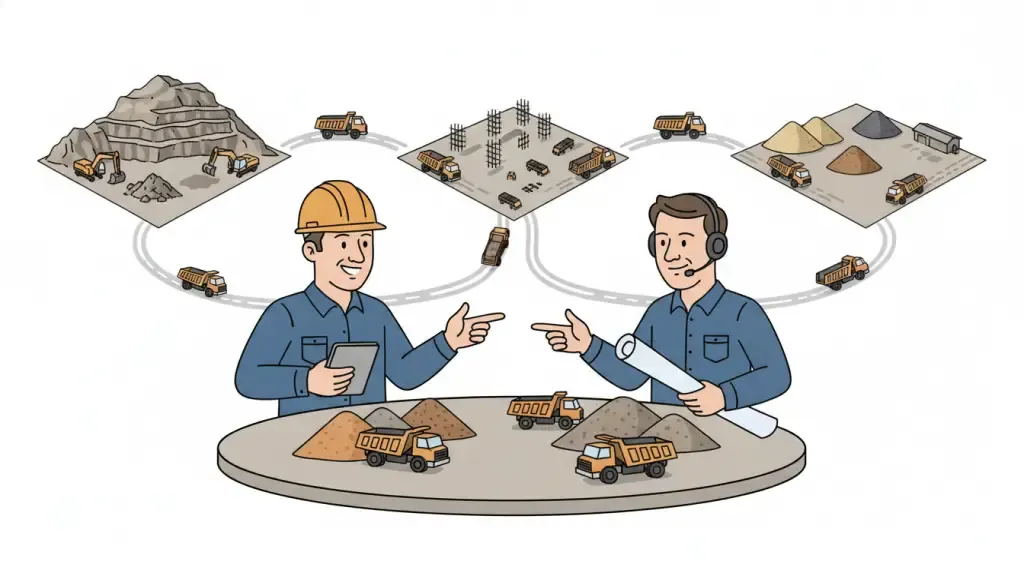
*Territory and delivery visibility should support better decisions without turning the CRM into another isolated planning tool.*
Field Service capabilities may be useful when the business must coordinate site visits, service cases, equipment, inspections, or scheduled work. Territory management can help leaders balance account coverage and identify opportunities near existing customers or delivery routes.
However, a partner should explain the boundary between Salesforce and dispatch or transportation software. Ask how the design will handle:
- Multiple job sites connected to one customer relationship
- Route changes and delivery exceptions
- Customer updates when a commitment changes
- Field visit notes that should influence the next sales action
- Service issues that reveal a broader account or product concern
The goal is not to make every team work in the same screen. The goal is to make the right information available at the right decision point, with clear ownership when something changes.
What Should You Look for in a Salesforce Partner?
Aggregate and construction materials companies should evaluate a partner on business understanding as much as product expertise. Ask for evidence that the team has worked with complex sales cycles, manufacturing or distribution processes, field operations, and integrations.
Look for a partner that will:
- Map your current process before recommending Salesforce features
- Prioritize the workflows with the clearest business value
- Include senior consultants beyond the sales presentation
- Explain data migration, integration, adoption, and governance risks
- Demonstrate the proposed system using your actual buying and delivery scenarios
- Document the solution so your team can operate it after implementation
Omnivo positions its team as business consultants first and Salesforce experts second. Its product-management-led delivery model prioritizes the highest-impact capabilities before expanding the platform. That approach can be especially important for a mid-market company that needs measurable progress without funding a long list of disconnected features.
Its broader Salesforce guide for retail, consumer goods, and custom manufacturing provides the cluster context for this narrower aggregate and construction materials use case. This article focuses on the buyer questions that are specific to project bids, material quotes, job sites, and delivery coordination.
How Should You Protect the Business Case Before Signing?
A Salesforce proposal should make the expected business change visible. Do not settle for a feature inventory that does not connect capabilities to decisions, owners, adoption, and measurable outcomes.
Before signing, ask for a phased roadmap that identifies:
- The first business problem to solve and why it comes first
- The users and teams included in the first release
- The data and integrations required for a reliable workflow
- The adoption measures that will show whether the system is being used
- The operational and financial indicators that will show whether it is working
- The decisions reserved for later phases instead of being hidden in scope
Also ask how payment and acceptance are tied to deliverables. Omnivo’s Pay for Results, Not Hours model frames payment around completed Salesforce deliverables rather than hours burned without an outcome. The specific engagement terms should be discussed directly, but the underlying question is universal: does the proposal align the partner’s incentives with your definition of progress?
[Request a strategic Salesforce conversation](https://omnivodigital.com/contact/) if your team is comparing partners, recovering from a stalled implementation, or preparing for a new build.
What Is the Right Next Step for an Aggregate Materials Company?
Start with a focused assessment of the commercial and operational handoffs that matter most. Map one representative project from first conversation through quote, order, delivery, and follow-up. Then identify where teams lose time, context, margin, or customer trust.
That exercise gives you a more useful basis for comparing Salesforce partners than a generic product demo. It also creates a practical first phase that can prove value before the platform expands.
For a relevant example of Salesforce supporting complex manufacturing workflows, see the Metroll customer story. When you are ready to discuss your own priorities, start with Omnivo Digital’s contact page and bring the process questions your team needs answered.