
FINRA Compliance Salesforce CRM: What Buyers Must Test
Evaluating a *FINRA compliance Salesforce CRM* means asking whether the proposed system can preserve records, protect sensitive data, and produce reliable evidence when regulators need it.
[Let’s Talk Strategy](https://omnivodigital.com/contact/)
A FINRA compliance Salesforce CRM design should be tested against FINRA Rule 4511 and SEC Rule 17a-4. Review retention periods, permitted formats, communications capture, audit history, access controls, and prompt production before signing. Salesforce can support the architecture, but configuration and governance remain the firm’s responsibility.
Start by separating regulatory requirements from what a CRM happens to store. That distinction clarifies which records belong in Salesforce, which require a dedicated archive, and what an implementation partner must prove. For the broader operating model, review this Salesforce for Financial Services compliance guide.
What Does FINRA Compliance Salesforce CRM Require From Your Records?
FINRA does not require a broker-dealer to use a particular CRM. It does require the firm to create, preserve, and produce complete and accurate books and records. Business communications captured through CRM-connected workflows can therefore fall inside the compliance boundary, even when they are not ordinary account or opportunity fields.
The first buyer test is record coverage. The proposed design should identify each regulated record, its authoritative location, retention period, alteration controls, and evidence that the control worked.
Why is the six-year rule only a starting point?
FINRA Rule 4511 generally requires members to preserve FINRA books and records for at least six years when no other period is specified. The rule also connects preservation format and media to SEC Exchange Act Rule 17a-4. A buyer should require the partner to map each record class to its governing obligation rather than accept a generic retention claim.
SEC Rule 17a-4 was amended to address electronic records, third-party recordkeeping services, and prompt production. A secure cloud environment is not, by itself, proof that the firm’s archive meets every applicable requirement. Compliance and legal teams should approve the interpretation before implementation begins.
What belongs in the record inventory?
Inventory correspondence, email, instant messages, trade blotters, asset and liability ledgers, notes, attachments, activity records, exports, integrations, and custom objects. If representatives or supervisors use a CRM-connected channel for business, the firm needs a documented policy for capturing and retaining those communications.
Q: Is storing a record in the CRM enough?
A: No. The firm must demonstrate authenticity, integrity, retention, and prompt production. Require evidence that records are preserved in an appropriate format, protected from premature modification or deletion, and searchable when regulators request them. Compliance and legal teams should validate the interpretation for the firm.
The practical test is whether the firm can identify every covered communication, show who changed what, preserve it for the required period, and produce it promptly. If the answer depends on manual exports or undocumented user behavior, the design is not compliance-ready.
Read FINRA Rule 4511 with compliance counsel before approving the solution.
How Does a FINRA Compliance Salesforce CRM Support SEC Rule 17a-4 Retention?
Salesforce can participate in a compliant recordkeeping architecture, but the CRM is not automatically a compliant archive. Covered books and records must be preserved in a format and on media that satisfy the applicable rule. Before signing, ask where the authoritative record will live, how deletion will be prevented, and how the firm will produce records promptly.
The second buyer test is architectural separation. Salesforce may organize business activity while a dedicated archive preserves designated records under the firm’s retention, integrity, and production requirements.
| Area | Salesforce role | Archive and governance test | | --- | --- | --- | | Record scope | Captures structured data, activity, notes, and workflow context. | Inventory every in-scope record and communication channel. | | Integrity | Permissions, field history, and audit features can reduce risk. | Prove records cannot be altered or deleted prematurely. | | Production | Supports operational search and reporting for authorized users. | Rehearse searchable, prompt production with provenance. |
Make the connection between Salesforce, the archive, and operating procedures a contractual deliverable. Require named owners, acceptance tests, and evidence artifacts instead of informal assurances from a demonstration.
How Should a FINRA Compliance Salesforce CRM Protect Sensitive Financial Data?
Begin with a privacy architecture that limits exposure by design. Ask the implementation team to map sensitive fields and objects, define role-based access, and document who can view, export, change, or delete each category. The review should include production, integrations, exports, sandboxes, administrators, and unstructured content.
The third buyer test is least privilege across the full data lifecycle. A strong proposal connects each control to an owner, operating procedure, test case, and evidence artifact.

Which layered controls should a buyer examine?
Least-privilege access is the starting point. Encryption can reduce the impact of unauthorized access, while audit trails can show what changed, who changed it, and when. Event monitoring can identify suspicious logins and unusual exports. Salesforce Shield may provide useful capabilities, but selecting a feature does not establish compliance.
Ask how sensitive data is masked before sandbox refreshes, who can access non-production environments, how exports are controlled, and whether activity is monitored. Also inventory attachments, free-text notes, email integrations, chat transcripts, and custom objects because regulated communications may exist outside the formal data model.
When reviewing the underlying org, use Omnivo’s Salesforce org audit guide to structure the discovery. Buyers can also review Salesforce consulting expertise when comparing the business and technical depth of potential partners.
- Which users, integrations, and administrators can export sensitive data?
- What encryption and event-monitoring controls are included?
- How are confidential records masked and governed in sandboxes?
- How will unstructured data be classified, retained, and protected?
- How will the firm prove that captured records remain complete and unmodified?
What Will Regulators Test During a Salesforce Audit?
A buyer should expect an examination to test trustworthy records, not merely whether the interface looks secure. Require evidence for each step below and ask compliance counsel to confirm that the controls fit the firm’s obligations.
The fourth buyer test is demonstrability. A partner should show how the firm will inventory records, trace changes, prove retention, retrieve evidence, and rehearse the process before an examination.
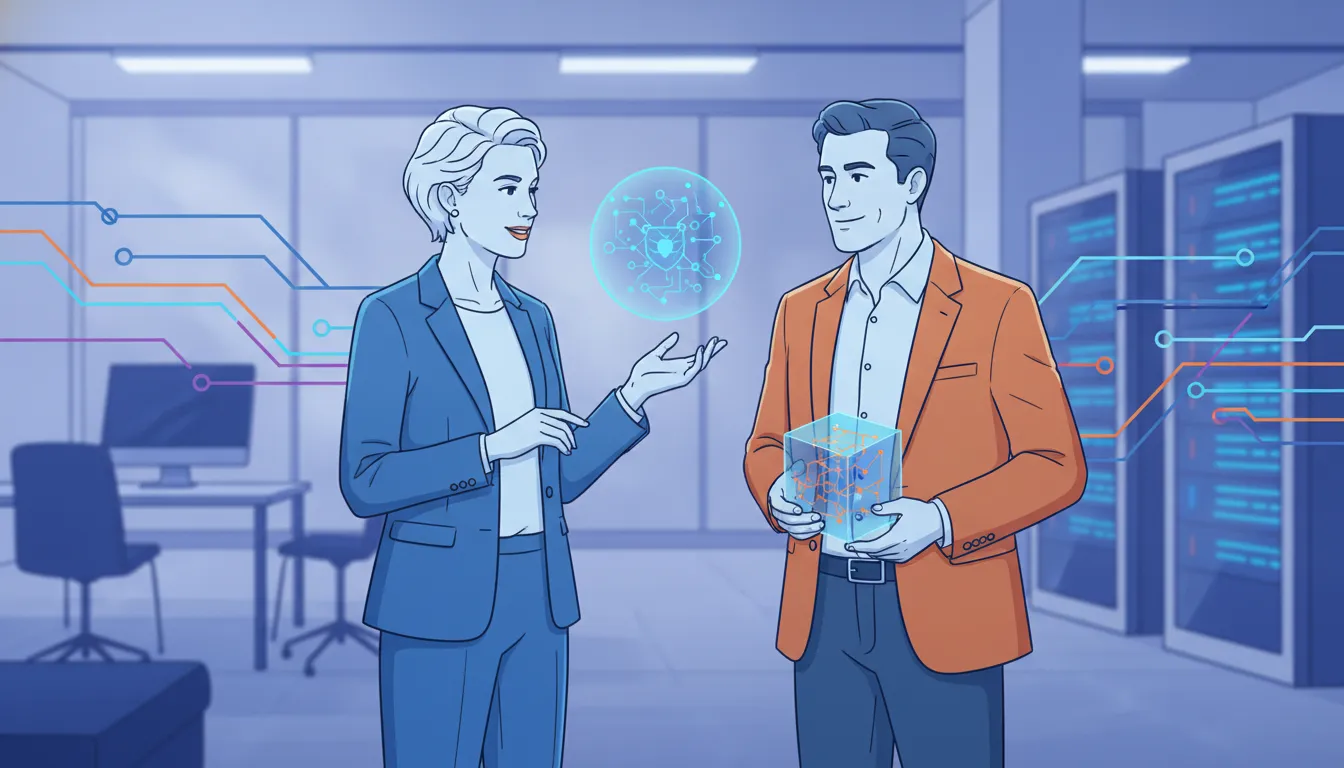
1. Define the examination universe. Inventory records and communication channels, including emails, instant messages, attachments, and less obvious Salesforce fields or objects. 2. Trace users and changes. Demonstrate audit history for representative business scenarios, including exports and administrative actions. 3. Prove retention and integrity. Show that records cannot be altered or deleted before the applicable period and explain how archival and immutable storage work together. 4. Demonstrate prompt production. Perform a timed retrieval exercise using a date range, user, communication type, or business event. 5. Test operating behavior. Rehearse access controls, masking, integrations, monitoring, exception handling, and change approval.
Make these demonstrations contractual deliverables with named owners, acceptance criteria, and retained evidence. This is how a buyer distinguishes a compliance-ready design from a polished product demonstration.
What Should a Compliance-First Salesforce SOW Include?
A compliance-first statement of work should define more than objects, workflows, and delivery dates. Before signing, require a written connection between the firm’s recordkeeping obligations, Salesforce design, and the evidence compliance teams must produce after launch.
The fifth buyer test is contractual precision. Every compliance promise should identify the control, owner, acceptance test, evidence artifact, and post-go-live responsibility.
How should controls and owners be named?
Translate broad promises into testable controls for role-based access, encryption, monitoring, audit trails, communications capture, archiving, sandbox handling, and production exercises. Specify who maintains evidence after go-live and how the team responds to a regulator’s request.
How should testing and change management work?
Require scenario-based testing before acceptance. Cover record capture, archival, search, export, access changes, attempted deletion, restoration, and production from integrated systems. Define how failed tests are documented, remediated, retested, and approved by compliance.
New objects, channels, integrations, releases, and policy changes can alter the compliance boundary. Require impact assessments, regression testing, updated procedures, and compliance sign-off before material changes reach production. Compare the proposed scope with Omnivo’s Salesforce services overview.
What Are the Most Common FINRA CRM Implementation Gaps?
The most expensive gaps are rarely visible in a polished Salesforce demonstration. They appear when a firm assumes a secure platform is compliant by default, treats only structured fields as records, or cannot prove what happened to data during an examination.
The final buyer test is gap ownership. If a proposal does not assign record scope, retention, communications capture, sandbox protection, examination rehearsal, and ongoing oversight, the compliance risk remains with the buyer.
- Out-of-box assumptions: A secure foundation still requires configuration, monitoring, retention, and governance.
- Unstructured data: Files, notes, attachments, and communications may sit outside the formal data model.
- Sandbox oversight: Copied customer or employee data needs masking, access review, and monitoring.
- Communications capture: A CRM workflow is insufficient if related channels are omitted.
- Unclear ownership: Name the people who approve rules, monitor exceptions, maintain integrations, and produce evidence.
- No rehearsal: Without a timed retrieval exercise, archive gaps may surface too late.
What should a buyer require before selecting a partner?
Require a traceable response to five questions: What records are covered? Where is each authoritative copy? How is alteration prevented? How quickly can the firm produce evidence? Who owns each control after launch?
[Let’s Talk Strategy about your Salesforce compliance architecture](https://omnivodigital.com/contact/)
Frequently Asked Questions
Is Salesforce Financial Services Cloud FINRA compliant out of the box?
No. Salesforce can support a compliance-oriented architecture, but the firm remains responsible for record scope, capture, retention, access, monitoring, evidence, and operating procedures.
What is the role of Salesforce Shield in FINRA compliance?
Salesforce Shield can support encryption, event monitoring, and field audit capabilities. Those features are controls within a larger operating model, not proof that the complete CRM and archive satisfy every obligation.
Do I need extra software for FINRA record retention in Salesforce?
It depends on the records, retention rules, permitted format, and production requirements. A buyer should determine whether Salesforce can meet each requirement or whether a dedicated compliant archive is needed.
How should broker-dealers manage Salesforce data for FINRA audits?
Maintain a documented record inventory, capture in-scope communications, restrict access, monitor changes, test retention and retrieval, and preserve evidence of those controls.
What are common pitfalls in FINRA-compliant CRM implementations?
Common pitfalls include assuming default settings are sufficient, omitting unstructured communications, overlooking sandboxes, failing to define archive ownership, and never testing prompt production.