

Salesforce custom Apex development services can help when standard configuration cannot support the way your business actually sells, serves, manufactures, or integrates. The right question is whether custom work can remove a costly constraint, improve adoption, or create a measurable advantage that point-and-click tools cannot deliver. For a broader view of how Salesforce development extends beyond standard configuration, review our custom Apex development guide.
Let's Talk Strategy about your Salesforce development roadmap
Salesforce custom Apex development is appropriate when a business process requires complex logic, high-volume processing, a controlled integration, or a user experience that declarative tools cannot deliver cleanly. The best development partner first tests configuration and standard Salesforce capabilities, then writes only the code that creates a durable business outcome.
For the broader industry context, start with our guide to Salesforce for retail, consumer goods, and custom manufacturing. That distinction protects buyers from forcing a complicated process into fragile workarounds or commissioning custom code before the business case is clear. A practical evaluation starts with the constraint, not the programming language.
When Does Salesforce Custom Apex Development Become the Right Choice?
Salesforce custom Apex development becomes the right choice when standard objects, flows, validation rules, and supported integrations cannot meet a documented requirement without excessive manual work, poor user adoption, or unacceptable risk. Code should address a specific business constraint, have a defined owner, and be measurable after release.
Point-and-click configuration remains the right starting point for many Salesforce requirements. It is often easier to inspect, adjust, and hand over to administrators. Custom development earns its place when the process has rules or scale that configuration cannot represent reliably.
As you compare Salesforce custom Apex development services, ask a prospective partner to separate the requirement into four decisions:
Can Salesforce already do this? Standard functionality and declarative tools should be assessed first. What is the business constraint? Define the cost of delay, manual work, errors, or low adoption. What must be custom? Is the gap in business logic, data movement, user experience, or system architecture? How will success be measured? Set a baseline for cycle time, exception volume, revenue, service levels, or user completion.
This sequence keeps custom development from becoming a feature-shopping exercise. It also gives executives a way to evaluate a proposal without needing to review every line of Apex.
Which Business Workflows Justify Custom Apex?
Custom Apex is most defensible for multi-object business rules, transaction processing, complex approvals, controlled automation, and operations that must run consistently across users or channels. Common examples include manufacturing order lifecycles, pricing logic, allocation rules, data synchronization, and workflow exceptions that cannot be handled cleanly with standard configuration.
A manufacturing or distribution company may need Salesforce to coordinate quoting, orders, work orders, inventory, purchasing, shipping, invoicing, and cost calculations. Those steps do not always fit neatly into a single standard object or simple automation. Custom logic can connect the process, but only if the data model and ownership rules are designed first.
Other reasonable use cases include:
Applying consistent pricing, eligibility, or allocation rules across related records. Processing large data sets asynchronously instead of making users wait for every calculation. Handling a complex approval path that changes based on product, geography, margin, risk, or account relationship. Creating controlled actions for internal teams or portal users without exposing unnecessary Salesforce complexity. * Supporting a proprietary operating process that is central to how the company makes money.
Custom Apex does not automatically make a process better. If the underlying workflow is unclear, code can make the confusion faster and harder to change. Discovery should therefore document the current state, target state, exception paths, data ownership, and decision rights before development begins.
When Should You Use Lightning Web Components Instead of Standard Screens?
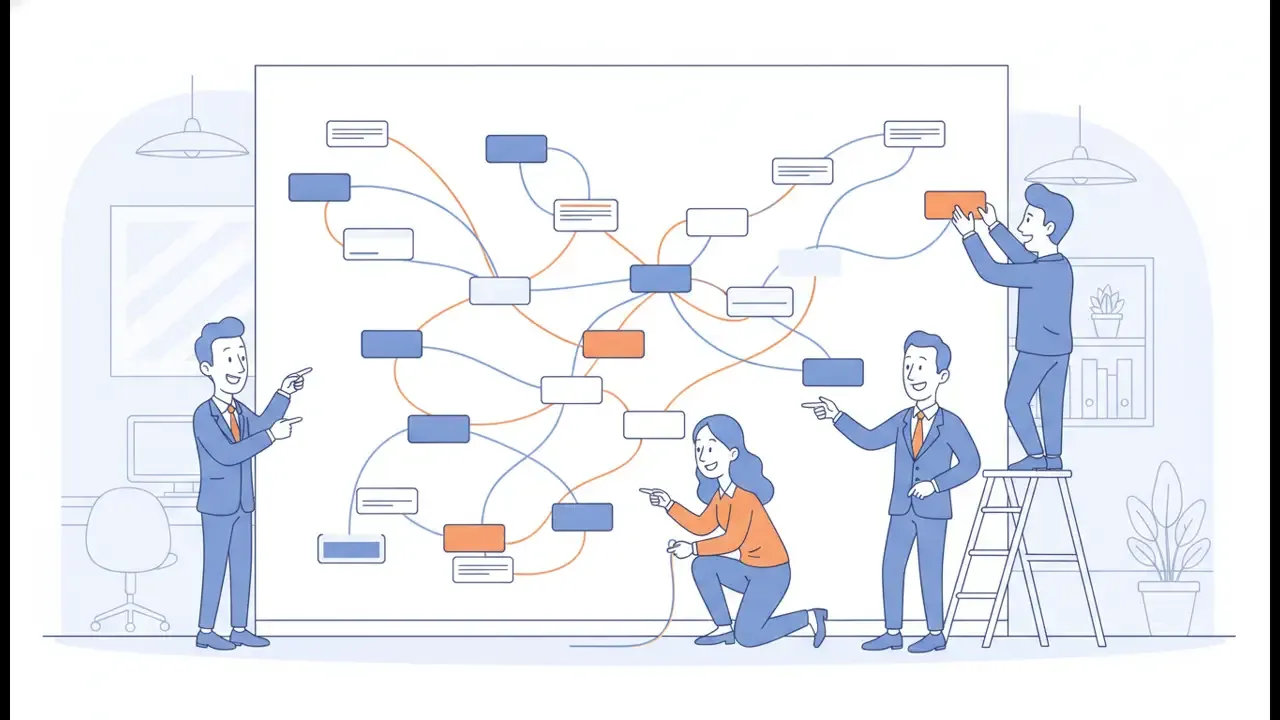
Lightning Web Components are useful when the standard Salesforce interface makes an important user journey slow, confusing, or impossible to complete in one place. A custom interface should simplify a high-value workflow, not decorate a standard page. Its value should be measured through completion time, adoption, error reduction, or improved visibility.
Salesforce custom Apex development services often include advanced Lightning Web Components because business requirements are not limited to back-end rules. A sales representative may need a guided quoting workspace. A service coordinator may need a focused dispatch view. A customer may need a portal experience that exposes only the actions and information relevant to its account.
Before approving a custom component, ask:
Which user journey is being improved? Which standard page or screen has been tested, and why does it fail? What data does the component display, create, or update? How will permissions, accessibility, mobile use, and error states be handled? * What happens when Salesforce changes the underlying object or platform capability?
The best custom interface is often narrower than the first request. A focused experience for one high-value workflow is easier to adopt and maintain than a replacement for every standard Salesforce screen.
Let's Talk Strategy about the Salesforce workflow your users cannot complete efficiently today
How Do Custom APIs Connect Salesforce to Proprietary Systems?
Custom API development connects Salesforce with proprietary, legacy, or operational systems when a standard connector does not support the required data, timing, or business rules. A sound design defines the system of record, data ownership, authentication, error handling, retry behavior, monitoring, and reconciliation before the first endpoint is built.
Many mid-market businesses have a home-grown CRM, manufacturing ERP, finance platform, or operational database that cannot simply be replaced. The integration question is not whether Salesforce should own everything. It is which system should own each fact and how teams can work from reliable, timely information.
| Evaluation area | Question to ask before approving custom API work |
|---|---|
| Ownership | Which system is authoritative for customers, products, orders, inventory, and financial records? |
| Direction | Which events or changes must move from Salesforce, and which must move into Salesforce? |
| Timing | Does the process need real-time action, scheduled batches, or an asynchronous queue? |
| Failure handling | How are timeouts, duplicates, rejected records, and partial failures identified and resolved? |
| Operations | Who receives alerts, reviews logs, and owns reconciliation when systems disagree? |
Omnivo Digital's documented technical experience includes integrations with platforms such as NetSuite, Stripe, Encompass, DocParser, Conga, and proprietary systems. The relevant buyer question is not whether a partner can name a connector. It is whether the partner can explain the business process, data contract, and operational ownership behind the integration.

How Should Buyers Evaluate Testing, Documentation, and Maintainability?
A custom Salesforce solution is maintainable when another qualified team can understand its purpose, test its behavior, monitor failures, and change it without guessing. Evaluate the proposed development standards, test coverage, deployment process, documentation, ownership model, and knowledge transfer, not just the feature list or estimated build time.
Code that works in a demonstration can still create long-term risk. Salesforce has platform limits, security requirements, release changes, and dependencies between objects, automations, integrations, and interfaces. A credible proposal explains how those dependencies will be discovered and governed.
Use this buyer checklist when comparing Salesforce custom Apex development services:
- Requirement traceability: Each custom class, trigger, component, or API should map to a documented business requirement.
- Test strategy: The team should define unit tests, integration tests, negative cases, bulk behavior, permissions, and regression coverage.
- Governor-limit awareness: The design should account for query, CPU, transaction, and asynchronous processing limits.
- Security review: Sharing, permissions, data exposure, authentication, and input handling should be tested explicitly.
- Deployment discipline: Version control, sandbox validation, release sequencing, and rollback or recovery procedures should be clear.
- Documentation: Business purpose, architecture, dependencies, configuration, support steps, and known limitations should be written for future operators.
- Knowledge transfer: Your administrators and leaders should know how to monitor the solution and decide what changes require development support.
Omnivo Digital positions documentation and knowledge transfer as part of technical delivery because client autonomy matters. That is especially important when a business has outgrown point-and-click tools but does not want to create a permanent dependency on one developer.
What Should a Salesforce Custom Development Proposal Include?
A Salesforce custom development proposal should connect the business problem to a defined scope, architecture, delivery sequence, testing plan, ownership model, and measurement plan. It should make clear what will be configured, what will be coded, what will be integrated, what is excluded, and how your team will operate the result after launch.
Before signing, compare proposals on substance rather than the number of features. A lower-effort estimate may omit discovery, data cleanup, exception handling, documentation, or user adoption work that later becomes an expensive change request.
Business case: The operational constraint and expected outcome are stated in business terms. Scope boundary: Objects, workflows, interfaces, environments, user groups, and exclusions are named. Phasing: The highest-impact capability is delivered first, with dependencies and decision points shown. Quality controls: Testing, security, code review, deployment, and release acceptance are defined. Ownership: Your team knows who will maintain configuration, code, integrations, and reporting. Measurement: The proposal identifies the baseline and the indicators that will show whether the work paid off.
Omnivo Digital's product-management-led approach prioritizes the features most likely to move the business forward, rather than treating every requested feature as equally valuable. Its broader Salesforce services and implementation approach is built around business process first, technology second.
If technical debt or past implementation decisions are complicating the choice, review the warning signs in our Salesforce technical debt remediation guide before approving more custom work.
Frequently Asked Questions About Salesforce Custom Apex Development Services
Buyers usually need to decide whether custom Apex, Lightning Web Components, or custom APIs are justified, how to control delivery risk, and how to protect long-term maintainability. The answers depend on the business process, the data architecture, and the measurable outcome, not on a preference for code over configuration.
Is Apex always better than Salesforce Flow?
No. Salesforce Flow and other declarative tools are often the better choice when they can support the requirement clearly, securely, and within platform limits. Apex is justified when the process needs more complex logic, scale, transaction control, integration behavior, or maintainability than configuration can provide.
Can Apex support manufacturing and distribution workflows?
Yes. Apex can support custom logic across quoting, orders, work orders, inventory, purchasing, invoicing, and related operational processes. The design still needs a clear data model, ownership rules, testing strategy, and phased scope so custom code supports the operating model rather than hiding process problems.
How do I choose a Salesforce custom development partner?
Ask each partner to explain its discovery method, configuration-versus-code decisions, testing standards, documentation, integration ownership, release process, and measurement plan. Look for senior involvement and evidence that the team understands your business process, not only the Salesforce technical vocabulary.
What should I ask for after a custom Apex project?
Request source and deployment documentation, architecture diagrams, test evidence, configuration notes, monitoring instructions, known limitations, support ownership, and a knowledge-transfer plan. Your team should be able to understand what was built, how it behaves, and how future changes will be evaluated.