
Salesforce Consumer Goods Cloud for distributors connects account planning, field visits, route execution, retail standards, and service data in one operating view. For a distributor evaluating the platform, the important question is not whether it has more features than Sales Cloud. It is whether those features reflect how your teams sell, deliver, replenish, and grow accounts. Start with the broader Salesforce guide for retail and consumer goods, then test the distributor-specific decisions below.
Let’s Talk Strategy: review your distributor workflows, integration priorities, and Salesforce roadmap with Omnivo Digital before you choose an implementation partner.
That decision becomes clearer when you assess the platform against the daily work of sales representatives, account managers, warehouse teams, and operations leaders.
What does Salesforce Consumer Goods Cloud do for distributors?
Salesforce Consumer Goods Cloud is an industry-specific Salesforce solution for planning and executing consumer goods sales across distributors, retail buyers, field teams, and service operations. It adds consumer goods data models and workflows to the Salesforce platform, giving leaders a more useful view of account growth, visits, products, inventory, and execution.
For distributors, the value is operational coordination. A sales manager can plan account coverage, a representative can prepare for a store visit, and an operations team can connect that activity to product availability and fulfillment. The point is not to put every process into one application without judgment. The point is to give each team the information it needs at the right decision point.
- Account planning: organize account goals, assortment priorities, forecasts, and growth plans.
- Field execution: plan visits, capture observations, manage tasks, and record outcomes from the field.
- Retail execution: track product availability, shelf conditions, displays, promotions, and store standards.
- Direct store delivery: support routes, tours, vehicle inventory, deliveries, and van-sales workflows where they fit the business.
- Service operations: connect distributor and retail customer issues to the account history and follow-up process.
A buyer should also ask where the platform stops. Consumer Goods Cloud does not remove the need for a sound product catalog, clean account hierarchy, reliable inventory data, or clear ownership between sales and operations. A strong implementation makes those dependencies explicit instead of promising that software alone will repair them. For the wider industry context, keep the retail and consumer goods pillar article as the broad reference, and use this page for distributor evaluation criteria.
Which Consumer Goods Cloud features matter most in distribution?
The best-fit features depend on the distributor’s route structure, channel mix, customer commitments, and inventory model. Most buyers should begin with the workflows that create or protect revenue: coverage planning, field visits, retail execution, trade activity, and delivery accuracy.
Route management and tour planning matter when representatives or delivery teams serve many locations on a recurring schedule. The system should help your team decide which accounts need attention, what work belongs on each visit, and how changes flow back to managers. It should support decisions, not turn the field team into data-entry clerks.
Van sales and direct-store delivery require a closer look at mobile use. A distributor may need to check vehicle inventory, capture an order, record a delivery, document a return, or flag an out-of-stock product while working away from the office. Buyers should test those actions under real connectivity and time constraints, not only in a polished desktop demo.
Retail execution is broader than taking a photo of a shelf. A useful process connects the visit objective, the products or displays being checked, the result observed, and the follow-up owner. That creates a record managers can use to improve account coverage and resolve recurring execution problems.
Perfect store execution can be valuable when it reflects your actual customer agreements. Define the standards first: assortment, placement, availability, promotion compliance, pricing rules, or display requirements. Then decide which measures belong in Salesforce and which should remain in a specialized merchandising or trade system.
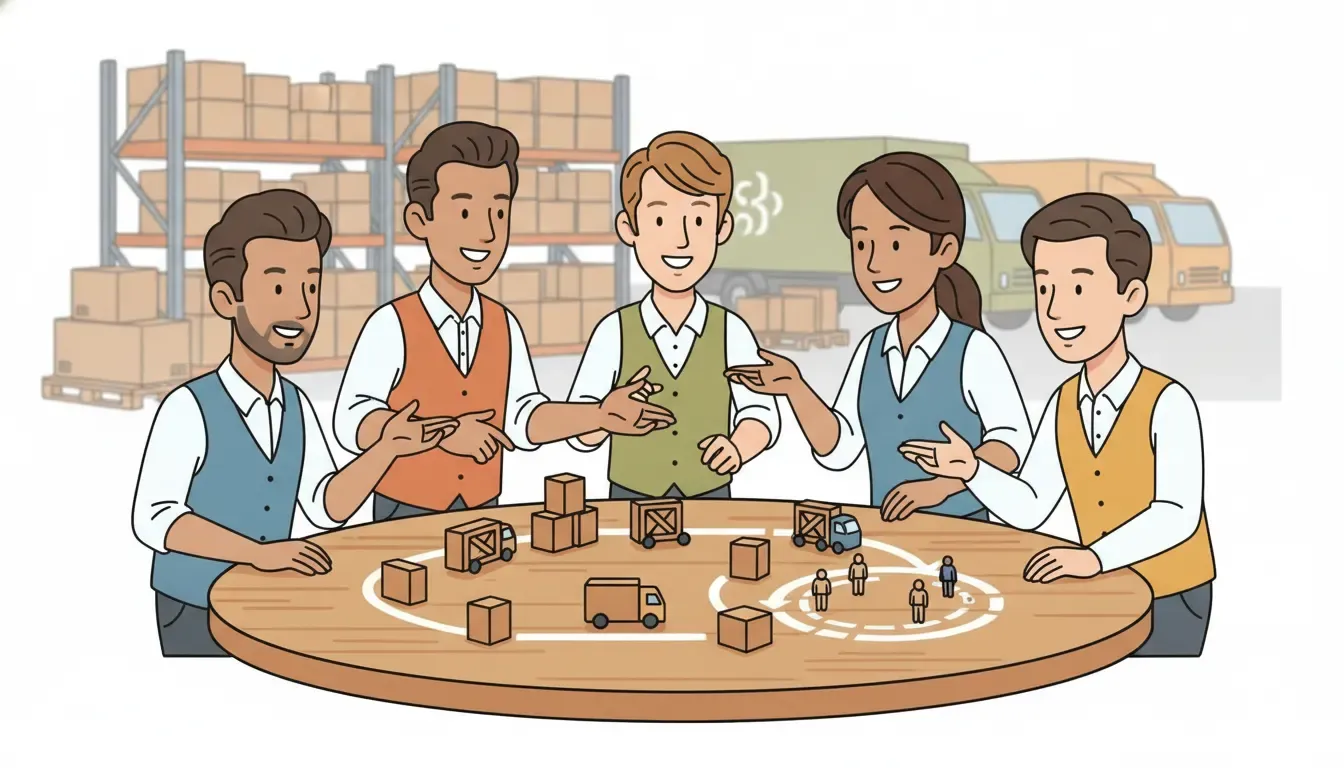
Consumer Goods Cloud should connect route, account, inventory, and execution decisions to the outcomes your distribution team measures.
Trade promotion management and forecasting deserve the same discipline. Ask whether your commercial team needs planning and approval controls, post-event analysis, or simply better visibility into commitments. Features should follow the business process and the decision it supports. If beverage distribution is your specific operating model, compare these questions with Omnivo Digital’s Salesforce guide for beverage distributors.
How should Consumer Goods Cloud connect to your ERP and order systems?
Salesforce Consumer Goods Cloud should become part of a connected operating process, not an isolated field-sales database. For most distributors, the integration design must clarify which system owns products, customers, pricing, inventory, orders, shipments, invoices, and service cases before any data is exchanged.
Start with ownership. Your ERP may remain the system of record for product availability, warehouse quantities, pricing, purchase orders, and fulfillment. Salesforce may own account planning, sales activity, visit execution, relationship history, and selected service workflows. An order-management platform may own order capture, allocation, shipment status, and returns. The right boundary is more valuable than a promise to synchronize everything.
Then map the decisions that require current data:
- Prepare: show the representative the account, product, pricing, and open-issue context needed before a visit.
- Execute: capture the order, visit outcome, retail condition, delivery result, or service need in the field.
- Confirm: return status from the ERP or order system so the account team can set accurate expectations.
- Measure: connect activity to availability, revenue, margin, service performance, or account growth.
Buyers should ask how the proposed integration handles duplicate accounts, failed messages, partial orders, canceled lines, product substitutions, and delayed warehouse updates. These edge cases are where a demo becomes an operating model. They also determine whether users trust the information enough to adopt the system.
Do not accept “real time” as an integration requirement without defining the business decision behind it. A route planner may need a daily planning snapshot, while a field representative may need current inventory for an order. The appropriate timing, error handling, and monitoring depend on the consequence of stale data.
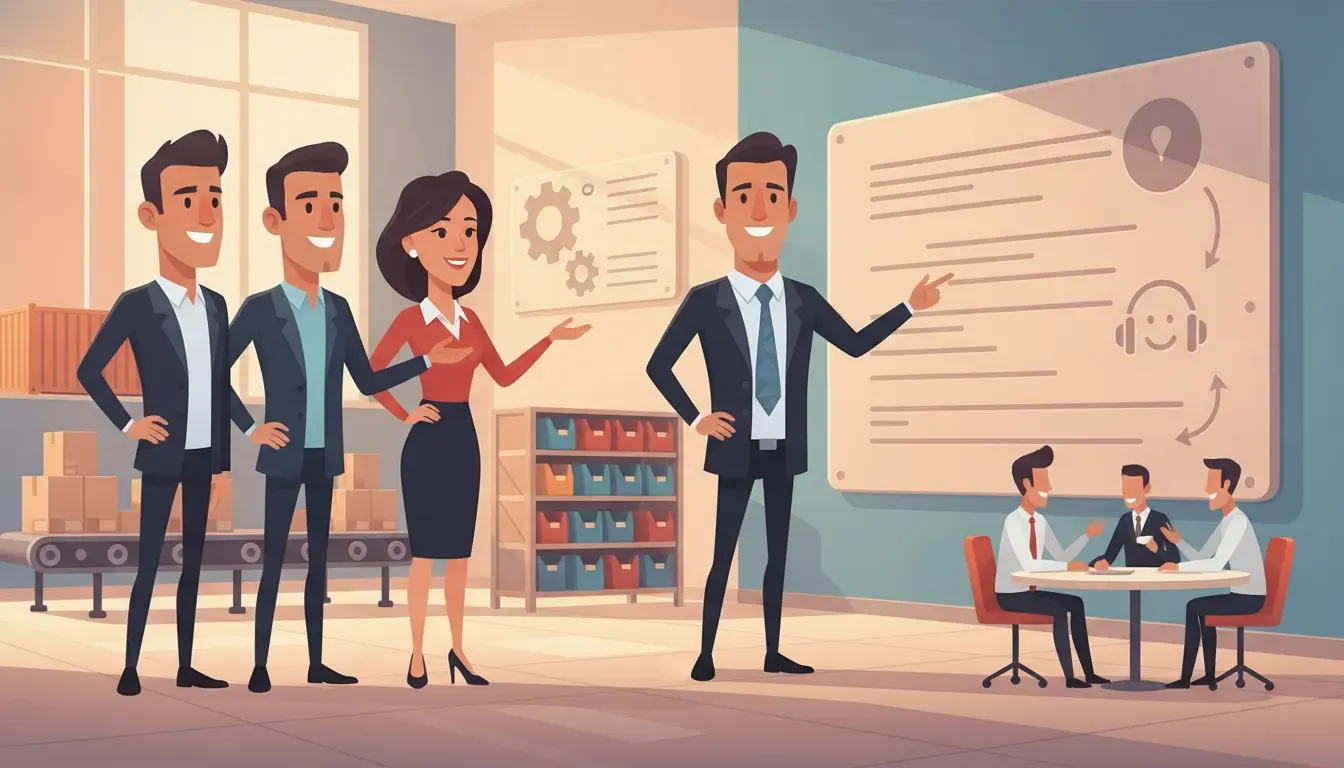
Integration planning should define system ownership and the handoffs between sales, warehouse, fulfillment, and service teams.
Omnivo Digital’s integration experience spans financial, marketing, service, and operations platforms. That kind of cross-system perspective matters for distributors because the implementation must fit the commercial process, not only the Salesforce data model. Review the firm’s Salesforce implementation services alongside any proposed integration scope to see how strategy, product management, and technical delivery fit together.
Talk through your integration plan with Omnivo Digital. A focused strategy session can turn a feature list into an integration and adoption roadmap.
When does Consumer Goods Cloud make more sense than Sales Cloud?
Sales Cloud may be enough when a distributor primarily needs lead, opportunity, account, activity, and forecast management. Consumer Goods Cloud becomes more compelling when field execution, route coverage, retail standards, direct-store delivery, trade activity, or consumer goods relationships are central to how the business operates.
| Decision area | Sales Cloud may fit | Consumer Goods Cloud may fit better |
|---|---|---|
| Sales motion | Fewer complex accounts with relationship-led selling | Large account coverage model with recurring field visits |
| Field work | Activities and opportunities are the main field record | Routes, tours, visits, vehicle inventory, and execution tasks matter |
| Retail standards | Basic notes and follow-up are sufficient | Assortment, displays, availability, and promotion checks need structure |
| Data model | Standard account, contact, product, and opportunity relationships work | Distributor, retail, route, tour, warehouse, visit, and product relationships need more context |
| Buying question | Can we manage pipeline and account growth? | Can we coordinate account growth with field and delivery execution? |
This is not a contest where the industry product always wins. A distributor should choose the smallest architecture that supports its highest-value workflows and leaves room for growth. Adding Consumer Goods Cloud without a clear operating need can increase complexity. Choosing only Sales Cloud when route and retail execution are core can push critical work into spreadsheets and disconnected applications.
Ask each implementation partner to demonstrate the same distributor scenario in both products. Use a real account hierarchy, a representative route, a product availability issue, an order exception, and a service follow-up. Compare the number of workarounds, handoffs, custom objects, and manual updates required. The practical difference will be more useful than a feature-count comparison.
What should distributors expect from implementation?
Consumer Goods Cloud implementation is a business design project as much as a Salesforce build. The timeline and complexity depend on data quality, integration count, field adoption, channel variation, security requirements, and how much of the current process lives outside formal systems.
A sensible implementation sequence is:
- Map the current operation: document how accounts are planned, visited, ordered, delivered, serviced, and measured.
- Choose the first value release: prioritize the workflow that can improve revenue visibility, execution, service, or operating efficiency.
- Define the data contract: agree on ownership, identifiers, refresh timing, exceptions, and reconciliation across Salesforce and connected systems.
- Design for the field: test mobile workflows with the people who will use them, including offline or low-connectivity conditions.
- Release in phases: demonstrate working capabilities, gather feedback, and add the next highest-impact process.
- Measure adoption and results: track usage alongside business measures such as visit completion, order accuracy, account growth, service response, or inventory visibility.
The partner’s delivery model deserves as much scrutiny as its Salesforce credentials. Ask who will lead discovery, who makes architecture decisions, how senior consultants stay involved, and how knowledge transfers to your team. A polished demo does not show whether the partner can resolve conflicting process requirements or make hard scope decisions. If manufacturing is part of your channel strategy, compare the proposal against the manufacturing CRM perspective as well as the distributor workflow.
Omnivo Digital approaches Salesforce work through product management, phased delivery, and business process analysis. Its “MBAs who code” positioning reflects a useful buyer test: can the team explain the business reason for a design choice before discussing the technical mechanism?
Also ask how payment and scope are tied to outcomes. Omnivo’s “Pay for Results, Not Hours” model is based on clients paying when agreed Salesforce deliverables are completed. That is a different commercial conversation from buying an undefined block of consulting time, and it gives a prospect another way to evaluate delivery accountability.
How can you evaluate a Consumer Goods Cloud partner before signing?
The right partner can connect distributor economics, field realities, data ownership, and Salesforce architecture. Evaluate the partner by asking for evidence of how it thinks, not only a list of certifications or a generic product demonstration.
- Industry understanding: Can the team explain distributor margin, account coverage, replenishment, route, delivery, and retail execution challenges?
- Business-first discovery: Will it define the target business outcomes before recommending clouds and customizations?
- Integration discipline: Can it show ownership maps, error handling, monitoring, and a plan for difficult data cases?
- Adoption planning: Does the proposal account for field usability, manager behavior, mobile conditions, and feedback loops?
- Phased delivery: Does the roadmap identify a first release with measurable value instead of promising every feature at once?
- Client autonomy: Will your team receive documentation, decision records, and knowledge transfer that reduce long-term dependency?
- Commercial accountability: Are deliverables, acceptance criteria, responsibilities, and payment triggers clear before work begins?
Before signing, request a written scope that names the workflows, integrations, data assumptions, out-of-scope decisions, acceptance criteria, and post-launch ownership. If the proposal uses broad phrases such as “configure best practices” without defining the resulting business capability, ask for a more precise commitment.
A distributor does not need the largest Salesforce program. It needs an operating model that sales, operations, warehouse, service, and leadership can use consistently. Consumer Goods Cloud can support that model when the implementation starts with the work and makes technology serve the process.
Discuss your distributor roadmap before you commit to Consumer Goods Cloud. Omnivo Digital can help you assess the business case, integration boundaries, and delivery plan for your operation.